


Ultimate Guide for Booking Etosha Safaris & Tours
Etosha National Park is one of the main tourist attractions in northern Namibia and is among the oldest and most famous wildlife reserves in Africa. It was created in 1907 when the German colonial government declared the area a game reserve.
At that time, the reserve was the largest protected area in the world. It stretched from the Etosha Pan all the way to the Kunene River on the border with Angola. The main aim was to protect the animals in the region, as many species were at risk because of uncontrolled hunting and human settlement.
Over the years, the boundaries of the park became much smaller than they were at the start. Even so, its value as a safe home for wildlife has continued to increase. At the heart of the park is the Etosha Pan, a huge dry salt flat that can even be seen from space. The name “Etosha” comes from the local Ovambo language and means “great white place.” It describes the bright, flat surface of the pan, which stands out in the middle of the surrounding landscape.
Why Visit Etosha
There are so many reasons to visit Etosha National Park and below are some of them.
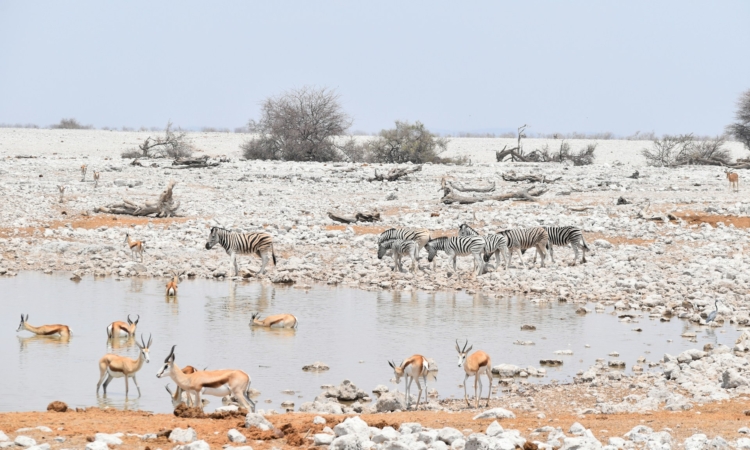
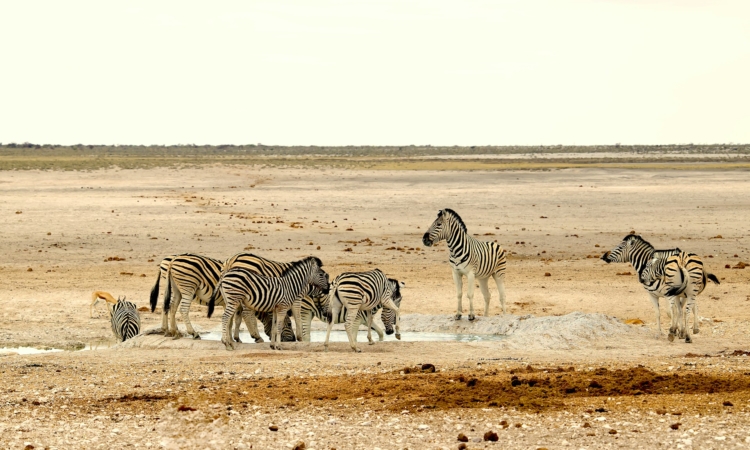
- Good Terrain: The terrain is mostly flat and open, with natural waterholes scattered across the park. This makes it easier to spot animals compared to many other safari parks. During the dry season, animals gather in large numbers at these waterholes, giving visitors a good chance to see different species in one place.
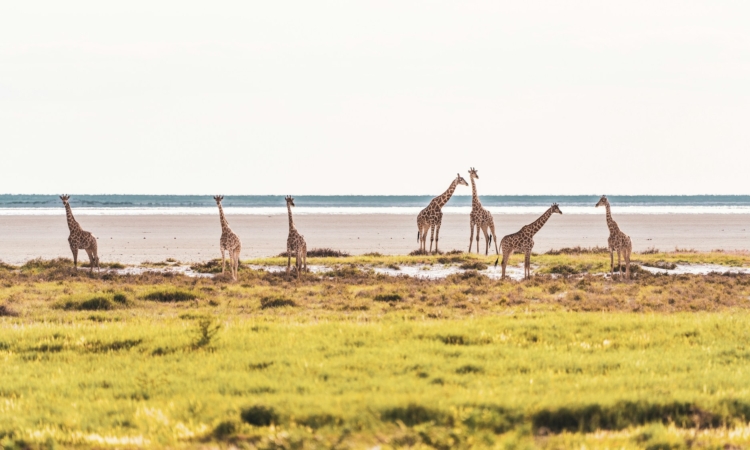
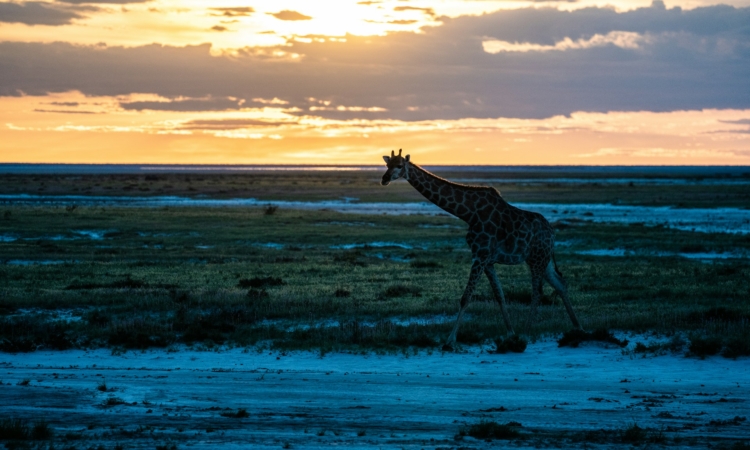
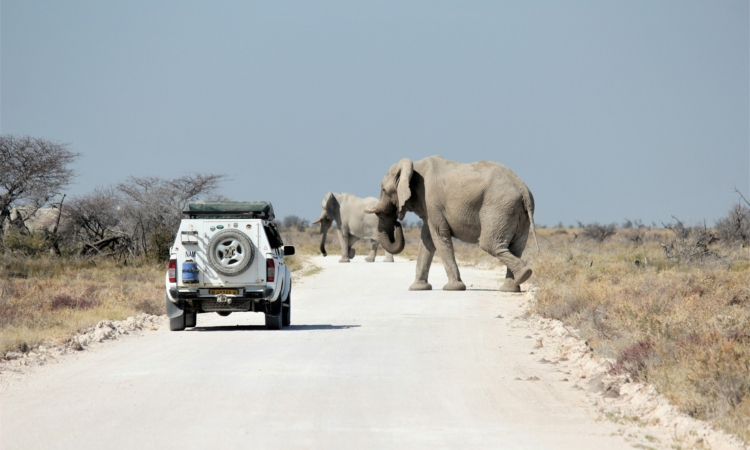
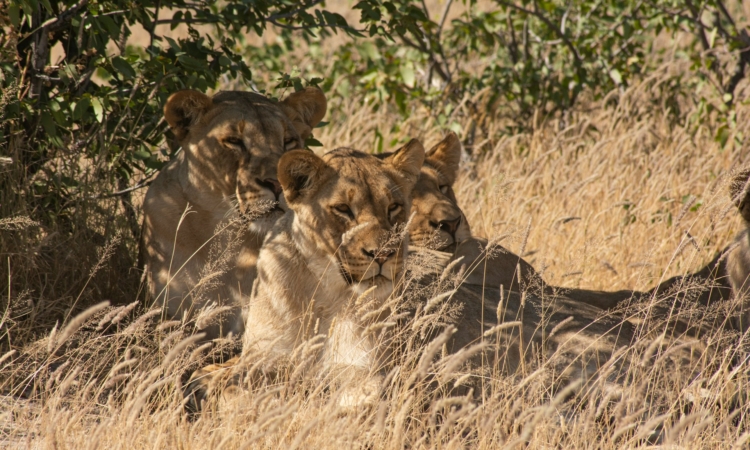
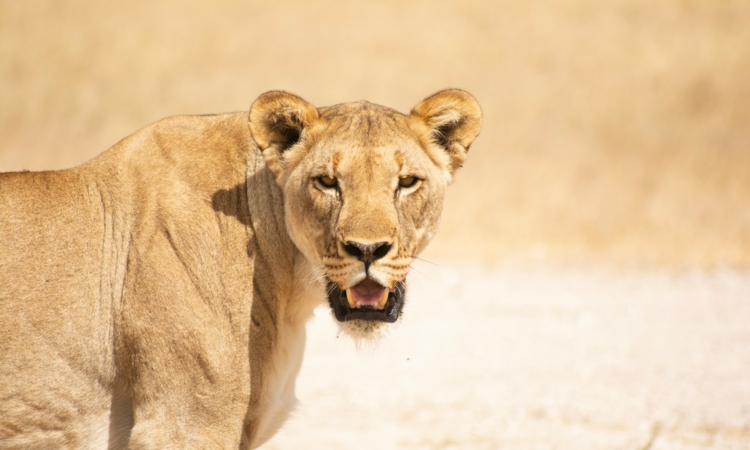
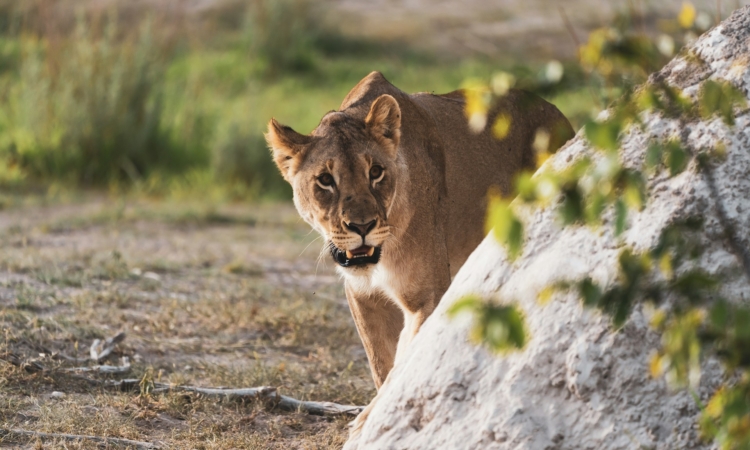
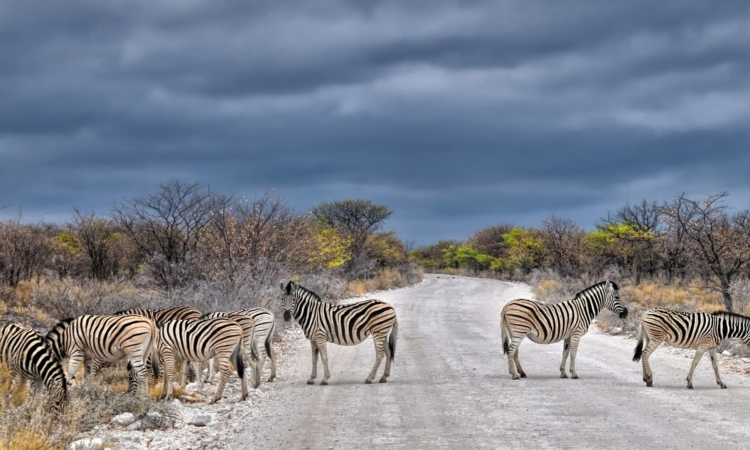
- Lots of Animals: Wildlife in Etosha includes elephants, rhinos, giraffes, zebras, and predators such as lions, leopards, hyenas, and cheetahs. The park is considered one of the best destinations for safari lovers because every season offers something different. In the dry season, animals concentrate around waterholes, while in the rainy season the scenery changes and young animals can often be seen. Visitors often remember the close encounters they have in Etosha, watching wild animals just a few meters from their vehicle. Many travelers are also drawn to the park for its dramatic scenery, especially the Etosha Pan.
- The Etosha Pan: This massive salt flat is so large it can be seen from space. During the rainy months, parts of the pan fill with shallow water, attracting migratory birds such as pelicans and flamingos. The pan briefly becomes a shimmering lake before drying back into a white salt desert.
- Birding Safaris in Etosha are amazing: Etosha is home to over 300 bird species and more than 100 species of mammals, making it a great destination for birdwatchers, photographers, and anyone who enjoys nature. Activities in the park include guided game drives, self-drive safaris, and relaxing at camp waterholes where wildlife comes to drink.
- Good Road Network: The park also has a good road network and a wide choice of accommodation, ranging from simple camping to comfortable lodges. This makes Etosha one of the most visitor-friendly safari parks in Africa.
Etosha Safari Costs – Entrance Fees, Lodges & Travel Budget Guide
Compared to other private reserves in African countries such as Botswana, South Africa, or Kenya, Etosha National Park is one of Africa’s most accessible and reasonably priced safari destinations. Etosha offers options for different travel preferences, from budget to mid-range and luxury stays. However, it is important to plan ahead and be clear on all costs by preparing a detailed budget.
Travelers should first consider the park entrance fees. As of 2025, international visitors pay N$150 per adult and N$50 per car per day. SADC and Namibian residents pay reduced rates: SADC adults pay N$100 per day, Namibian adults pay N$50 per day, and children under 16 enter free. These fees are lower than many other African parks and are paid at the park gates.
Accommodation is one of the main costs that can affect your budget. Prices vary depending on the season and type of room. At Namibia Wildlife Resorts (NWR) camps such as Okaukuejo, Halali, or Namutoni, a double room or chalet costs between N$900 and N$2,500 per night. Campsites are more affordable, at N$300 to N$600 per person per night. Outside the park, options range from luxury safari lodges (N$3,000 to N$7,000 per person per night, often including meals and guided drives) to budget guesthouses (N$600 to N$1,000 per night).
Transport costs depend on your travel style. Many visitors choose self-drive safaris, which are flexible and often cheaper. Car hire in Namibia costs between N$800 and N$1,200 per day for a standard vehicle, and between N$1,500 and N$2,500 for a 4×4, depending on the type and rental company. Guided safaris in Etosha cost between N$2,500 and N$6,000 per person per day. These usually include fuel, permits, and the expertise of a professional guide, with prices depending on the operator and group size.
Food and drinks vary in price depending on the lodge, camp, dining style, and season. Most camps offer meals costing between N$100 and N$300. Self-catering is allowed at most lodges and can help reduce costs, especially for longer stays.
Top Things to Do in Etosha – Best Tourist Activities
Whether you choose to travel alone or join guided excursions, Etosha offers many activities for both adventure seekers and nature enthusiasts.
- Wildlife Viewing
- Visit the Etosha Pan
- Photography
- Filming
- Night Safaris
- Bird-watching
- Camping
Top Things to See in Etosha – Best Tourist Attractions
Some of the top things to see in Etosha National Park include:
- Wildlife (Lions, Elephants, Rhinos, Leopards, and Hippos etc)
- Etosha Pan
- Waterholes
- The Himba Tribe
Find out more about top things to see in Etosha.
Climate & Weather of Ethosha
Etosha National Park has a semi-arid climate with two seasons: dry and wet. The dry season runs from May to October with little rain. Animals gather at waterholes, making it easier to see wildlife.
Days are warm, but mornings and evenings can be cold, so warm clothes are needed.
The wet season runs from November to April with heavy, short rains. The park turns green with fresh grass, and many animals give birth, attracting predators. Birds and migratory species are also common.
While animals spread out, sightings are still rewarding. Both seasons offer special safari experiences in Etosha.
How to Get to Etosha Park
Travelers can reach Etosha National Park by road, air, or across borders. The most common route is driving from Windhoek, which takes 4–6 hours via towns like Outjo and Otjiwarongo.
Many rent cars, with 4x4s offering extra comfort, while guided tours and transfers are also available.
Tours often include park entry, game drives, and accommodation, making them easy for first-time visitors. Charter flights from Windhoek or other safari areas land at airstrips near Okaukuejo, Halali, Namutoni, or private lodges, offering the fastest option.
Travelers from South Africa or Botswana can also drive across borders to combine Etosha with other destinations.
Best Time to Visit Etosha in Namibia
Etosha National Park offers great Namibia safari experiences in both the dry and wet seasons. From May to October, the dry season is best for wildlife viewing as animals gather at permanent waterholes.
Visitors can see elephants, lions, zebras, giraffes, rhinos, and antelopes, often together. Vegetation is thin, making spotting easier, and evenings at floodlit waterholes give chances to see animals at night.
From November to April, the wet season brings green scenery, bird-watching with over 400 species, and flamingos at salt pans. It is also calving season for herbivores, attracting predators.
Each season offers something special, making Etosha worth visiting year-round.
Etosha Accommodation – Where to Stay
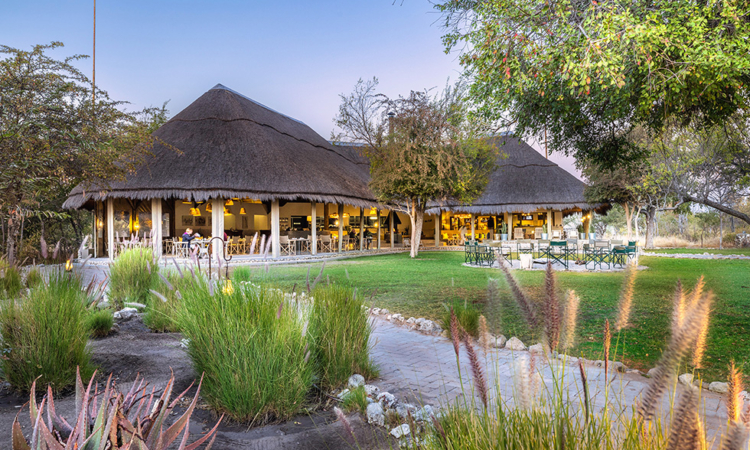
Etosha National Park has several accommodation options inside the park. Okaukuejo Camp is the most popular, known for its floodlit waterhole where rhinos, elephants, and lions can be seen.
It offers chalets, budget rooms, and campsites near the southern gate. Halali Camp, in the centre, has bungalows, a pool, a restaurant, and its own waterhole, making it convenient for safaris.
Namutoni Camp, built around a German fort in the east, has suites, rooms, and campsites close to famous waterholes.
Dolomite Camp in the west offers chalets with wide views and rare wildlife.
Onkoshi Camp is an eco-friendly lodge by the salt pan.
Campsites in Etosha
Accommodation in Etosha National Park includes several camps, each offering different experiences. Okaukuejo Camp, near the southern gate, is famous for its floodlit waterhole and has chalets, budget rooms, and campsites.
Halali Camp, in the centre, is quieter with bungalows, a pool, a restaurant, and its own waterhole, making it good for multi-day safaris. Namutoni Camp, on the eastern side, is built around a German fort and offers suites, rooms, and campsites near waterholes like Klein Namutoni and Chudop.
Dolomite Camp in the west has chalets with wide views and rare wildlife. Onkoshi Camp offers eco-friendly, private accommodation by the salt pan.
Popular Etosha National Pak FAQs
Below are some of the most popular questions and answers about Etosha National Park in Namibia.
- What is Etosha National Park? Etosha National Park is a famous wildlife park in northern Namibia and one of Africa’s oldest game reserves.
- When was Etosha National Park created? It was created in 1907 by the German colonial government.
- Why was Etosha first protected? It was protected to save animals from uncontrolled hunting and settlement.
- What does the name Etosha mean? Etosha means “great white place” in the local Ovambo language.
- What is the Etosha Pan? The Etosha Pan is a huge dry salt flat that can be seen from space.
- Why is Etosha good for wildlife viewing? The land is flat with many waterholes, making animals easy to see.
- What animals can I see in Etosha? You can see elephants, rhinos, giraffes, zebras, lions, leopards, hyenas, and cheetahs.
- Why is the dry season good for safaris in Etosha? Animals gather at waterholes, so you can see many species in one place.
- What happens in the wet season in Etosha? The park becomes green, and many young animals are born.
- Can I see birds in Etosha? Yes, over 300 bird species live in the park, including flamingos and pelicans.
- Is Etosha good for photographers? Yes, the waterholes, animals, and Etosha Pan make great photo spots.
- How much are Etosha entrance fees for international visitors? International visitors pay N$150 per adult and N$50 per car per day.
- Do SADC and Namibian residents pay less? Yes, SADC adults pay N$100 and Namibian adults pay N$50 per day.
- Do children pay entrance fees? Children under 16 enter free.
- How much do NWR camps cost inside the park? Rooms cost between N$900 and N$2,500 per night.
- How much do Etosha campsites cost? Campsites cost between N$300 and N$600 per person per night.
- How much is a luxury lodge outside the park? Most luxury lodges cost between N$3,000 and N$7,000 per person per night.
- Are self-drive safaris common in Etosha? Yes, many visitors rent cars and drive themselves.
- How much does car hire cost? Standard cars cost N$800 to N$1,200 per day, and 4x4s cost N$1,500 to N$2,500 per day.
- How much does a guided safari cost in Etosha? Guided safaris cost between N$2,500 and N$6,000 per person per day.
- What food prices should I expect in Etosha? Meals in camps usually cost between N$100 and N$300.
- What are the best activities to do in Etosha? You can go on game drives, see the pan, take photos, do night drives, watch birds, or camp.
- What are the top things to see in Etosha? You can see wildlife, the Etosha Pan, waterholes, and the Himba people.
- What is the weather like in the dry season? It is warm during the day and cold in the mornings and evenings.
- What is the weather like in the wet season? It has short heavy rains and green scenery with many young animals.
- How do I reach Etosha National Park? Most people drive 4 to 6 hours from Windhoek or join a guided tour.
- Can I fly to Etosha? Yes, charter flights land at airstrips near the main camps and lodges.
- What is the best time to visit Etosha? May to October is best for seeing animals at waterholes, but the park is good all year.
- Where can I stay inside Etosha? You can stay at Okaukuejo, Halali, Namutoni, Dolomite Camp, or Onkoshi Camp.
- What makes Okaukuejo Camp special? It has a floodlit waterhole where you can see animals like rhinos at night.