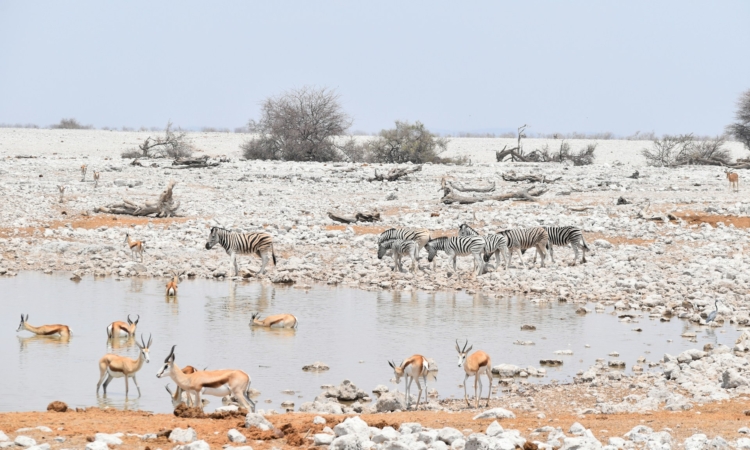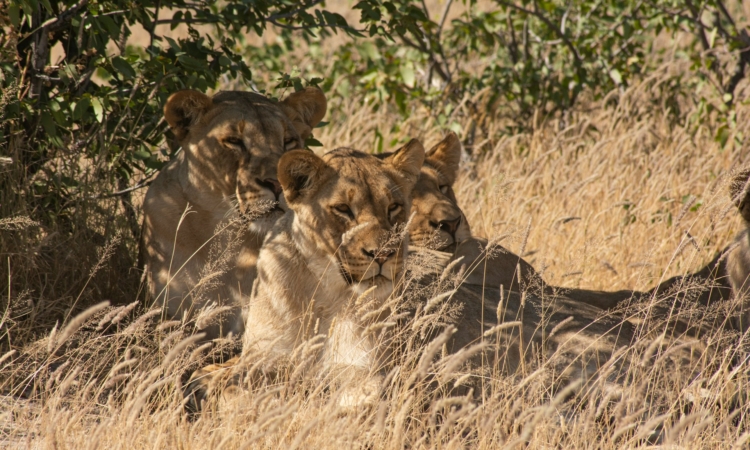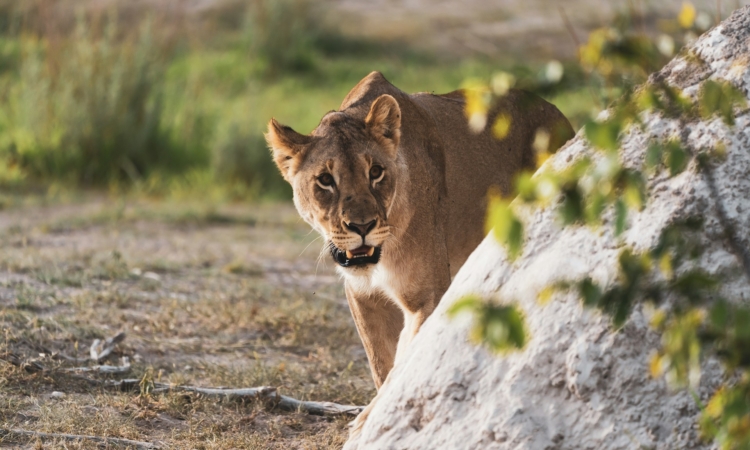

The lions in Etosha National Park are among the most popular animals for visitors to watch. These strong predators move freely across the park’s savannahs, woodlands, and open plains. They are often found near waterholes where other animals come to drink. Etosha has a healthy lion population that has adapted well to the park’s dry climate and open terrain. Lions usually hunt at night or in the early morning when the air is cooler, targeting zebras, springboks, wildebeests, and, when working together in groups, sometimes larger animals like giraffes.
The park’s flat landscape makes it easier to see lions from a distance. In the dry season, when animals gather near water sources, sightings are more likely. Visitors may spot lone males, lionesses resting, or whole prides lying under mopane trees during the hottest part of the day. Lions are important for keeping the balance of nature in the park by controlling the numbers of plant-eating animals and helping maintain a healthy environment.
Etosha’s lions are well adapted to its dry conditions. Unlike lions in wetter regions, they often travel long distances in search of food and water. They can go several days without catching a large meal. Lionesses do most of the hunting, while males focus on protecting the pride and marking their territory. The park’s open spaces and fewer thick bushes make it easier to observe their behaviour, from hunting and feeding to social interactions and moments of play or rest.
Conservation measures in Etosha help protect lions from dangers such as poaching and loss of habitat. These efforts ensure that the lions remain an important part of the park’s wildlife and continue to be a highlight for visitors now and in the future. Seeing them in their natural surroundings offers a special insight into the life of one of Africa’s most respected predators.